
Best Puerto Rico Beaches
The coastline changes character every few miles, with each stretch offering something different. Exploring Puerto Rico by coast can be more useful than simply following a traditional top-ten list, especially if you want to understand how each part of the island feels.
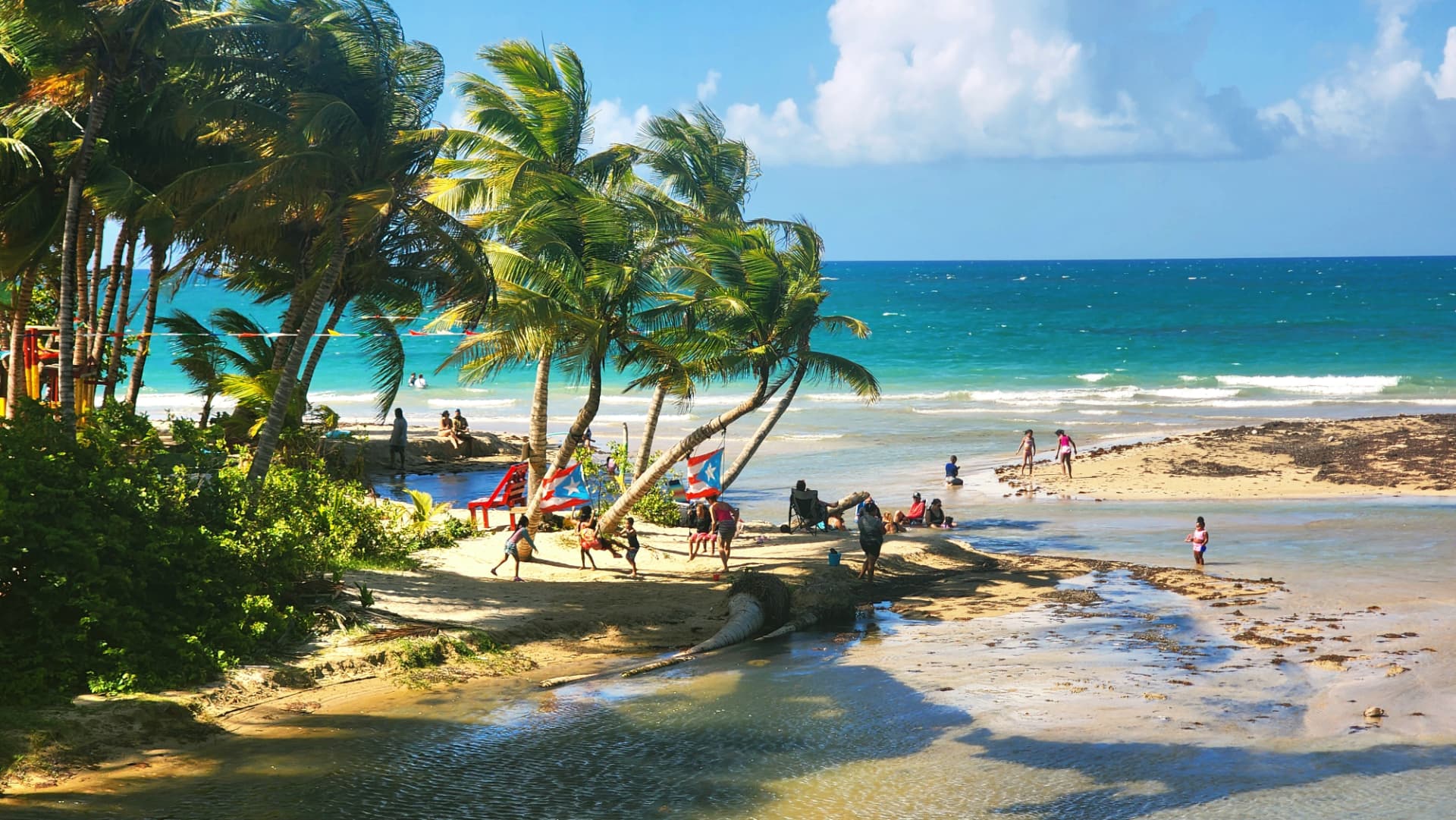
North — city beaches and open Atlantic water
From Condado and Ocean Park through Isla Verde and west toward Dorado and Isabela, Puerto Rico’s north coast faces the open Atlantic. This side of the island is known for wider beaches, stronger waves, and easy access to the coast without traveling far from the San Juan metropolitan area.
Be mindful of shore break and rip currents, especially during the winter months when larger northern swells arrive. For calmer water, look for more protected spots such as Playita in Condado or the lagoon side of Ocean Park.
East — calm bays and the departure point for the outer islands
The east coast, around Luquillo, Fajardo, and the nearby cays, tends to have calmer, shallower waters, making it a great choice for families, snorkeling, and first-time paddlers. Luquillo’s crescent-shaped bay is a classic example, with beautiful scenery and easy access to the beach.
The area is also a major starting point for boat trips and ferries to places like Icacos, Culebra, and Vieques, so you can easily combine a morning at the beach with an afternoon on the water. Compared with many other parts of the island, this stretch of coast also has more developed facilities and parking, making it especially convenient for a full day out.
West — surf, sunsets and long open sand
Rincón, Aguadilla, and the beaches around Isabela are at the heart of Puerto Rico’s surf culture and are also some of the best places to watch the sun set over the ocean. The water and beach conditions change with the seasons, with bigger and more powerful waves in winter and calmer, clearer conditions in summer that are better for swimming and relaxing.
When the surf is strong, look for more sheltered spots like Crash Boat and Steps if you’d rather snorkel or enjoy the water without surfing. Conditions can change quickly, and some areas have strong currents, so always pay attention to local beach flags and ask for advice before swimming at an unfamiliar beach.
South — warmer, drier and generally calmer water
The Caribbean-facing south coast, stretching from Guánica and Cabo Rojo through Ponce and Salinas, has a noticeably different feel from the rest of the island. The weather is generally hotter and drier, the coastline is flatter, and the waters tend to be calmer. Playa Sucia, tucked beneath the Cabo Rojo lighthouse, is one of the region’s most iconic spots and a perfect example of the scenery you’ll find here.
Shade can be limited and services are less developed than along the north and east coasts, so come prepared with plenty of water, food, and sun protection. The extra planning is worth it, though, especially if you’re looking for quieter beaches and stretches of sand that can feel surprisingly uncrowded even on weekends.
Named beaches and access notes can be added here per coast.
Explore Puerto Rico with OnPoint Tours.
ALL GUIDES