
11 Things to Do in Puerto Rico
Puerto Rico is small enough to cross in a few hours and varied enough to feel like several destinations. This list frames the eleven experiences most itineraries are built around.
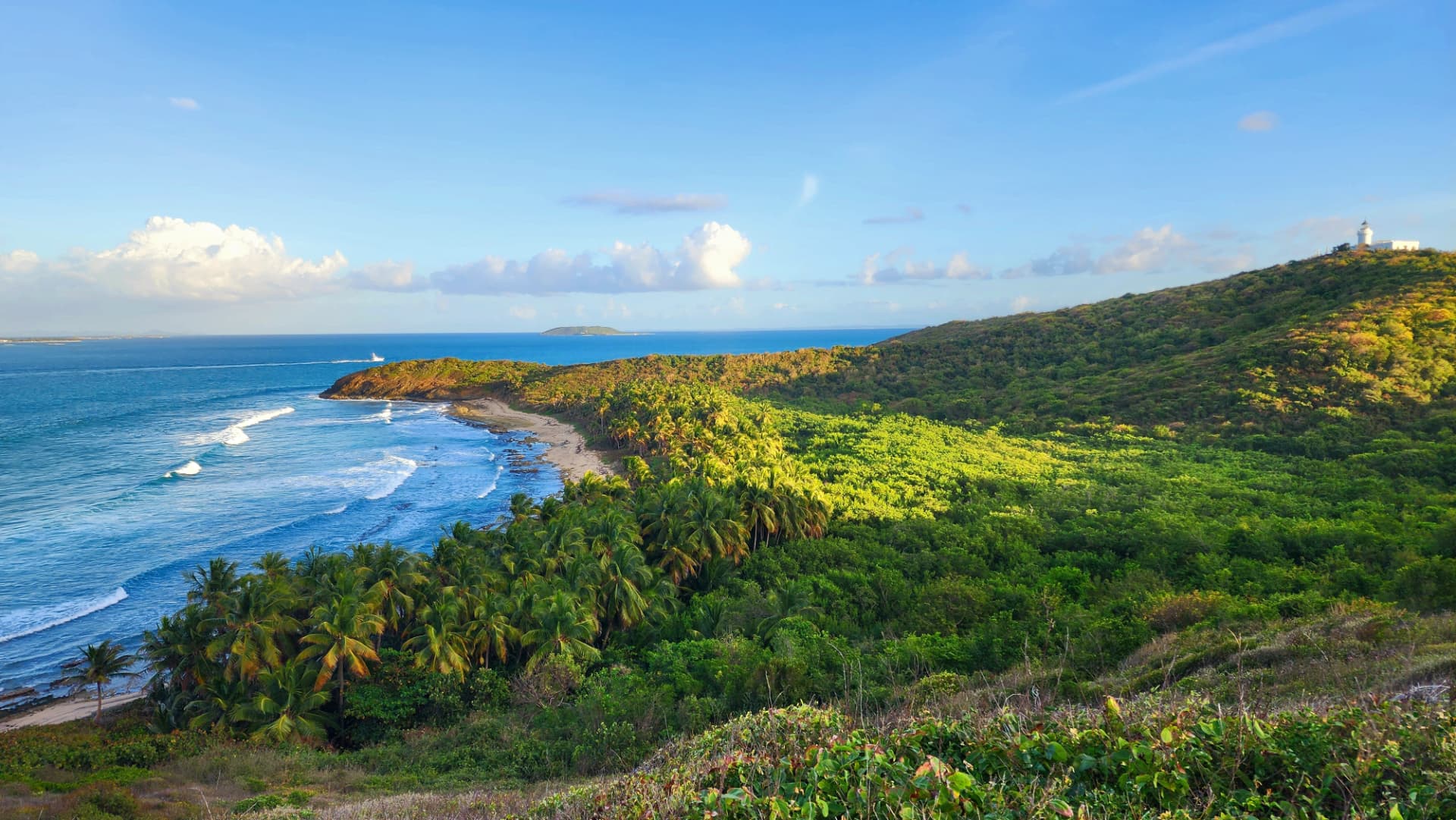
The shortlist most trips are built on.
Walk the forts and streets of Old San Juan
The walled city is the single densest half-day on the island: two Spanish forts, a cathedral, a governor's residence still in use, and roughly seven blocks of colonial grid between them. Everything is walkable, which makes it the best first day of any trip.
Treat the forts as the anchor and let the streets fill the gaps. Cruise-ship mornings are the busiest window, so an early or late start gives you noticeably quieter cobblestones.
Hike El Yunque National Forest
El Yunque is the only tropical rainforest in the United States forest system, about an hour east of San Juan. Short trails lead to waterfalls and lookout towers, while longer routes climb into cloud forest where the vegetation changes completely.
Access to the main recreation area is managed by timed reservation, so book before you drive out. Rain is part of the experience: bring shoes with grip and expect trails to be slick even on a bright morning.
Kayak a bioluminescent bay
Puerto Rico has three bioluminescent bays — Mosquito Bay in Vieques, Laguna Grande in Fajardo, and La Parguera in the south — where microorganisms light the water when it is disturbed. Paddling through them at night is the island's most unusual hour.
Book on the darkest nights of the lunar cycle for the strongest glow, and skip sunscreen or bug spray in the water to protect the organisms. Tours run rain or shine and last around two hours including the paddle in and out.
Spend a day on the west-coast surf beaches
Rincón and the beaches around Aguadilla form the island's surf belt, with consistent winter swell and a relaxed, low-rise town culture that feels far from the capital. Even without surfing, the sunsets here are the best on the island.
Winter brings the bigger waves and the whale-watching season; summer flattens the water and suits swimming and snorkelling. Rent a board locally and ask about the day's conditions before choosing a break.
Visit the island's coffee haciendas in the central mountains
The central cordillera around Jayuya, Adjuntas and Utuado grows Puerto Rico's high-altitude coffee, and several working haciendas open for tours that follow the bean from shade-grown tree to roast.
Roads up here are narrow and winding, so allow more driving time than the map suggests. Mornings are clearest; afternoon cloud tends to settle over the peaks and can shorten the views.
Explore the caves and karst country of the north
The northern limestone belt is riddled with sinkholes, underground rivers and cave systems, the best known being the Camuy river cave network. Above ground, the karst hills create the distinctive green mogote landscape.
Cave access depends on maintenance and weather conditions, so check current status before travelling. For a reliable alternative, the region's nature reserves and river canyons offer guided hikes year-round.
Take a boat day to Culebra or Vieques
Both islands sit east of the main island and hold its calmest, clearest water — Flamenco Beach on Culebra and the long undeveloped stretches inside the former naval land on Vieques.
Ferries leave from Ceiba and fill quickly, so buy tickets online in advance; small planes from San Juan or Isla Grande are the faster and more reliable option. Either island rewards an overnight far more than a rushed day trip.
Eat along a coastal kiosk route
Kiosk strips like Piñones east of San Juan and Luquillo further along the coast line up dozens of open-air stands selling fritters, seafood and cold drinks. It is the most direct way to eat your way through local cooking in one stop.
Go hungry and order in small rounds across several kiosks: alcapurrias, bacalaítos, empanadillas, then something grilled. Weekends are loud and social; weekdays are quieter and quicker.
See the Arecibo and Camuy area landscapes
The Arecibo area combines scientific history with dramatic karst terrain, and the surrounding roads pass through some of the island's most striking green sinkhole country. The northern coastline nearby adds cliffs and open Atlantic beaches.
Plan this as a driving day rather than a single stop, and combine it with the region's caves, the Arecibo lighthouse park, or a beach afternoon around Isabela on the way west.
Follow the historic core of Ponce
Ponce, on the southern coast, is the island's second historic city: a broad plaza, the red-and-black striped Parque de Bomberos, neoclassical mansions and one of the Caribbean's better art museums.
The south is drier and hotter than the north, so walk the centre in the morning and save the afternoon for the museum or the coast at La Guancha. It works well as a stop on a cross-island drive rather than a day trip from San Juan.
Finish with a sunset on a west-coast beach
Because the west coast faces open water, it is the only side of the island where the sun sets into the sea. Beaches around Rincón, Aguadilla and Cabo Rojo all deliver it, each with a different crowd.
Arrive at least forty minutes early to settle in, and stay past the moment itself: the sky often peaks ten minutes after the sun is gone. A beachfront bar or a cooler both work — this is the island's simplest closing ritual.
Additional detail for each of the eleven entries can be added here.
Explore Puerto Rico with OnPoint Tours.
ALL GUIDES